
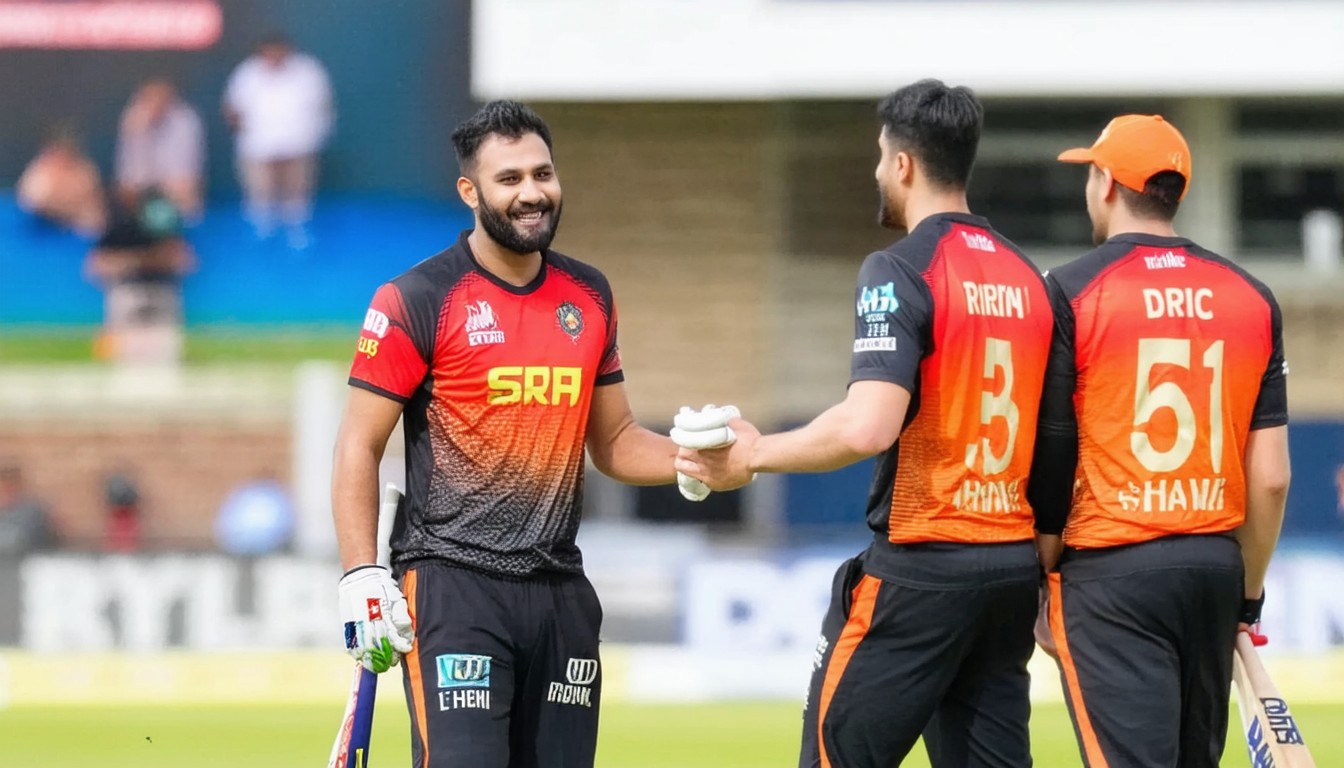

The Sunrisers Hyderabad (SRH) versus Delhi Capitals (DC) clash remains a high-stakes fixture in the Indian Premier League calendar. Both franchises are laden with promising talent, ambitious leadership, and a desire to climb the playoff ladder. This fixture, deeply rooted in competitive history, often reshuffles league standings and generates headlines for its intensity and dramatic finishes.
As stadiums fill with anticipation and digital chatter crescendos, the nuances—head-to-head statistics, predicted playing XIs, pitch conditions, and recent form—become vital for fans, analysts, and fantasy enthusiasts alike. Breaking down SRH vs DC goes beyond raw numbers; it’s about understanding evolving strategies and the contextual edge each side can leverage.
Historical Head-to-Head: Trends and Turning Points
SRH and DC, though relative newcomers compared to some franchises, have built a compelling rivalry since their first IPL encounter. Historically, Sunrisers Hyderabad has had a marginally better record over Delhi Capitals, often winning key matches under pressure. Yet, these margins have narrowed in recent seasons as DC’s core has matured and their bowling attack has found bite.
A contextual analysis reveals some noteworthy patterns:
- SRH Dominance in Bowling-Friendly Conditions: Hyderabad’s bowling-centric approach has often neutralized Delhi’s top order at venues favoring seam and swing, such as Uppal and Chennai.
- Close Contests in Recent Years: While SRH enjoyed a string of victories in earlier IPL editions, DC has returned the favor recently by clinching crucial league and playoff meetings.
“Momentum in T20 often pivots on small moments—fielding lapses, powerplay breakthroughs, or a set batsman accelerating at the death. Both SRH and DC have shown the ability to seize such windows,” says a prominent IPL commentator.
Such head-to-head trends suggest that neither side holds overwhelming psychological ascendancy, making each new chapter genuinely unpredictable.
Predicted Playing 11: Key Players to Watch
Team selections in IPL are rarely static, with fitness, form, and tactical considerations driving changes. Yet certain core performers have emerged as match-winners for their respective outfits.
Sunrisers Hyderabad (SRH)
- Openers: Abhishek Sharma, Mayank Agarwal
- Middle Order: Rahul Tripathi, Aiden Markram (c), Heinrich Klaasen (wk)
- All-Rounder: Washington Sundar
- Lower Middle & Finishers: Abdul Samad, Marco Jansen
- Bowlers: Bhuvneshwar Kumar, Umran Malik, T. Natarajan
Spotlight
- Rahul Tripathi brings consistency and intent at No.3, often capitalizing on start-stop games.
- Umran Malik’s express pace rattles even well-set batsmen, especially on lively decks.
- Aiden Markram’s steady leadership and adaptability have held this evolving team together.
Delhi Capitals (DC)
- Openers: Prithvi Shaw, David Warner (c)
- Middle Order: Mitchell Marsh, Rishabh Pant (wk), Lalit Yadav
- All-Rounders: Axar Patel
- Lower Order: Rovman Powell, Sarfaraz Khan
- Bowlers: Kuldeep Yadav, Anrich Nortje, Khaleel Ahmed
Spotlight
- David Warner faces his former franchise, bringing an additional competitive edge.
- Kuldeep Yadav’s resurgent spin complements DC’s pace battery, creating mid-innings pressure.
- Rishabh Pant’s aggressive intent can turn matches, but his fitness post-injury remains a topic of scrutiny.
Squads may vary on match day, but the above lineups present both firepower and depth, setting the stage for a high-voltage contest.
Tactics and Match-Ups: Where the Battle Will Be Won
While individual skill levels are high across both camps, several tactical matchups could tilt the game:
SRH Batting vs DC New Ball Attack
Delhi’s opening spell, likely spearheaded by Nortje and Khaleel Ahmed, pits SRH’s assertive openers against pace and swing. How SRH’s top three cope with early movement will be pivotal.
DC’s Powerplay Ambitions vs SRH’s Seamers
DC’s aggressive intent in the Powerplay, courtesy of Shaw and Warner, comes up against the guile of Bhuvneshwar Kumar and the raw speed of Umran Malik. Quick wickets upfront could significantly dictate Delhi’s approach in the middle overs.
Spin in the Middle Overs
Both lineups boast potent spinners—Kuldeep for DC, and Sundar for SRH. Containing set batsmen and snaring vital middle-over wickets remains a core theme. Historically, teams that win the spin battle often command these contests.
Death Overs Finishing
Finishers like Heinrich Klaasen and Rovman Powell can accelerate in the final overs, but require a base. Death bowling mastery—led by T. Natarajan and Nortje—may ultimately decide the outcome.
Pitch Report: Conditions, Strategy, and Possible Outcomes
The venue exerts a powerful, sometimes underestimated, influence on both tactics and team selection.
Typical Hyderabad Track
- Traditionally offers a two-paced wicket: sluggish for strokeplay early, with pace on offer later in the night.
- Dew can play a major factor during evening games, easing batting as the match progresses.
- Average first innings scores have hovered in the 160–175 range, although totals above 190 have occasionally been chased down, reflecting a subtle shift toward batting-friendly strips.
Impacts on Strategy
- Teams winning the toss often choose to field first to mitigate dew and gauge target-setting.
- Seamers get movement early, but spinners become influential during the mid-phase.
- Batters who can rotate strike and accelerate late—such as Warner or Tripathi—thrive here.
Empirical evidence from prior seasons suggests the side batting second enjoys a marginal advantage, but results remain closely split depending on the quality of death bowling and game management.
Conclusion: What to Expect from SRH vs DC
The SRH vs DC rivalry embodies IPL’s blend of spectacle and strategy. With evolving team compositions, smart captaincy, and shrewd tactical plans, both franchises are capable of swinging momentum at crucial junctures. Recent form, head-to-head trends, and pitch nuances underline the match’s razor-thin margins.
Fans can expect a balanced contest, with individual brilliance and shrewd match-ups shaping the outcome. Whether a breakthrough Powerplay spell, a dynamic middle-order cameo, or a last-over thriller, the stage is set for drama.
For strategists, optimizing playing XIs according to the surface, weather, and opposition plans will be crucial. Observing how emerging stars fared under pressure—and which experienced head marshals their resources best—could offer lessons for the rest of the tournament.
FAQs
What is the head-to-head record between SRH and DC?
The head-to-head record is closely matched, with Sunrisers Hyderabad maintaining a slight historical edge. Recent years have seen Delhi Capitals bridging the gap, leading to a more balanced rivalry.
Who are the key players for SRH and DC in this fixture?
For SRH, watch out for Rahul Tripathi, Umran Malik, and captain Aiden Markram. In the DC camp, David Warner, Rishabh Pant, and Kuldeep Yadav are central to their chances.
What impact does the Hyderabad pitch have on the match?
The Hyderabad pitch typically assists bowlers initially but becomes easier for batting as dew sets in. Spinners and seamers both play important roles, and chasing tends to be a preferred strategy due to the dew factor.
How important is the toss result in SRH vs DC?
Winning the toss can provide an advantage, particularly if dew is expected. Teams tend to opt for bowling first, allowing them to chase under more predictable conditions.
Which bowlers have a history of performing well in this encounter?
Bhuvneshwar Kumar and T. Natarajan have delivered strong performances for SRH, while Anrich Nortje and Kuldeep Yadav stand out for DC in head-to-head matches.
Are there any significant recent changes to team combinations?
Both teams have shuffled their line ups based on current form and injuries, with young Indian players given larger roles alongside experienced international stars. Team sheet announcements close to match time usually reveal final decisions.