
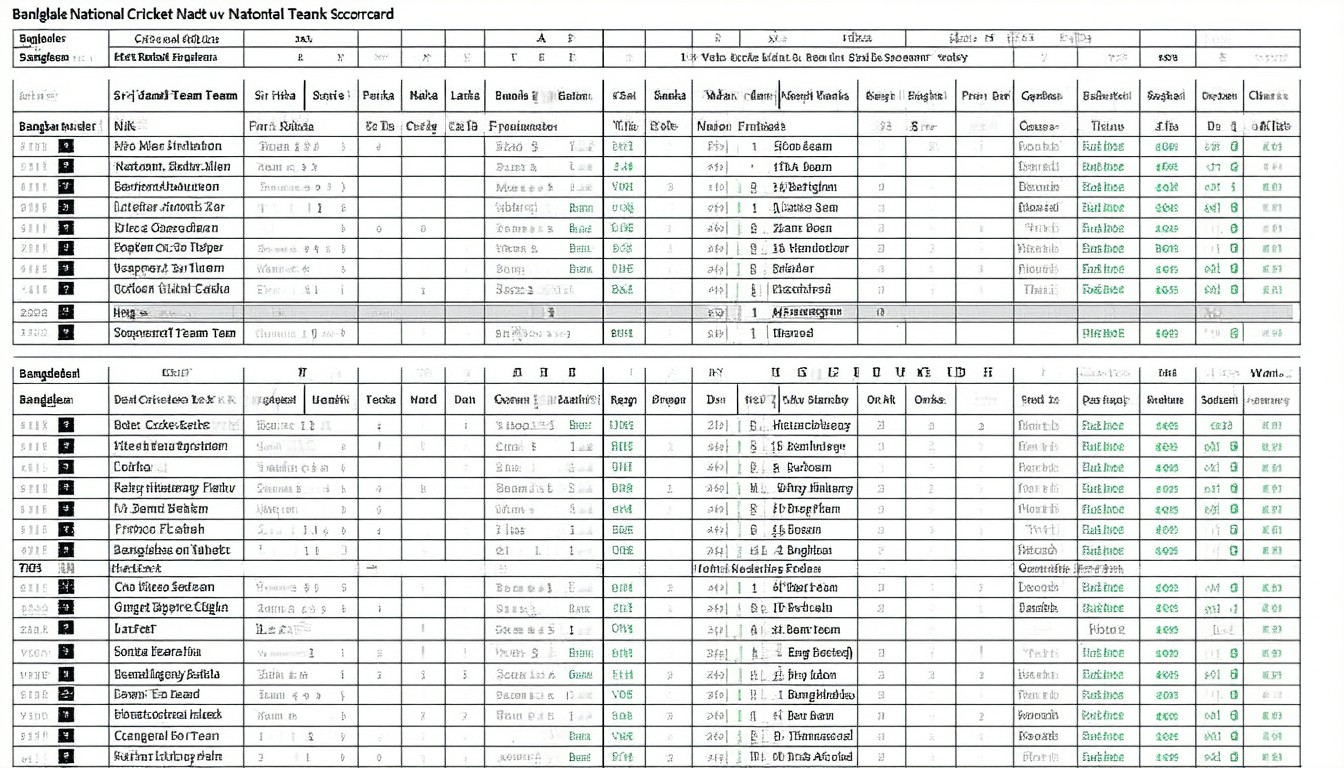

Cricket in South Asia is a phenomenon that transcends sport, shaping narratives and forging national identity. Among the keenest rivalries in international cricket stands the Bangladesh national cricket team vs Sri Lanka national cricket team encounter. Each match scorecard between these two competitors offers a tapestry of individual brilliance, tactical depth, and shifting fortunes, reflecting both evolving team strategies and regional cricketing culture.
Overview of the Rivalry: More Than Just Numbers
The contests between Bangladesh and Sri Lanka have come a long way since their inaugural meetings in the late ’80s and early ’90s. For much of the early period, Sri Lanka enjoyed clear dominance, leveraging seasoned players and a robust domestic structure. However, recent decades have seen Bangladesh transition from underdogs to serious contenders, regularly challenging and defeating established cricketing nations.
Key Trends in Bangladesh-Sri Lanka Encounters
- Sri Lankan Consistency: Historically, Sri Lanka’s strong top order and spin attack guided them to frequent wins, especially in subcontinental conditions.
- Bangladesh’s Ascendancy: In the 2010s, Bangladesh began securing headline victories, supported by emerging stars like Shakib Al Hasan and Mushfiqur Rahim.
- Thrilling Finishes: Several ODIs and T20Is between these teams have been decided in the final overs, contributing to a reputation for unpredictability and high entertainment value.
This journey is imprinted in the match scorecards—statistical ledgers that not only document victories and defeats but showcase rising talents, evolving tactics, and even the emotional pulse of cricket-loving nations.
Analyzing a Recent Bangladesh vs Sri Lanka Scorecard
Match scorecards are the heartbeat of cricket, chronicling the contest ball by ball and weaving statistics into narrative. To illustrate, consider a recent ODI encounter:
Bangladesh vs Sri Lanka: ODI Match Snapshot
- Venue: Shere Bangla National Stadium, Dhaka
- Bangladesh Innings: 246/9 (50 overs)
- Top Scorer: Mushfiqur Rahim – 84 runs
- Sri Lanka Bowling Highlights: Dushmantha Chameera – 4 wickets
- Sri Lanka Innings: 224 all out (48.5 overs)
- Top Scorer: Kusal Perera – 73 runs
- Bangladesh Bowling Highlights: Mehidy Hasan – 3 wickets
- Result: Bangladesh won by 22 runs
Such a scorecard tells several stories at a glance: a resilient Bangladeshi batting performance anchored by Mushfiqur Rahim, balanced by aggressive Sri Lankan bowling, followed by a measured bowling display that ultimately restricted the Sri Lankan chase.
“A well-analyzed scorecard provides insights that numbers alone cannot—a tale of pressure, tactical shifts, and turning points,” notes a leading cricket analyst.
Contextualizing the Numbers
While the aggregate figures are important, scorecards must be read alongside context: Was the pitch turning? Did dew affect the second innings? How did captaincy and fielding impact the result? For instance, in the match above, Bangladesh’s ability to rotate strike and accelerate during the final overs made a decisive impact. Conversely, key wickets by Mehidy Hasan shifted momentum back towards Bangladesh, a turning point visible in the falling run rate on the scorecard.
Statistical Insights: Patterns in Scorecards
Looking across dozens of Bangladesh-Sri Lanka matches, scorecards reveal several recurring patterns:
- Top Order Dependence: Both teams often rely heavily on early wickets to set the tone, leading to matches where the outcome hinges on the third or fourth wicket partnerships.
- Spin as a Decisive Factor: The success of spinners like Mehidy Hasan (Bangladesh) and Wanindu Hasaranga (Sri Lanka) showcases the importance of middle overs in turning matches.
- Chasing Challenges: On slow subcontinental pitches, chasing targets above 230 in ODIs has proved difficult, with most successful run chases requiring at least one big partnership.
- Clutch Performers: Standout players—Shakib Al Hasan, Mushfiqur Rahim, Angelo Mathews, Lasith Malinga—have often featured in game-defining moments, as their tallies in multiple scorecards attest.
A composite study of their scorecards over five years underlines this: the win-loss ratio has grown more balanced, and matches increasingly see new players stepping up rather than relying solely on established stars.
Match Scorecards: A Tool for Coaches, Fans, and Analysts
For Coaches and Teams
Scorecards provide invaluable data for post-match analysis—identifying weaknesses, setting training priorities, and informing selection decisions. Trends in dot balls, boundary rates, powerplay returns, and death over performances can shape practice regimes and match-day tactics.
For Broadcasters and Commentators
In real time, commentators break down scorecards to capture shifts in momentum and contextualize performances for viewers. These insights frame the emotional narrative that makes cricket so compelling for fans.
For Fans and Historians
Cricket fans pore over scorecards not just for numbers but to relive pivotal moments or debate “what if” scenarios. Historians and statisticians, meanwhile, use these primary sources to map legacies and cricketing eras.
Highlighted Scorecards: Defining Matches in the Rivalry
Certain matches stand out for their drama and impact:
2018 Nidahas Trophy T20I (Colombo)
- High-scoring finish.
- Bangladesh’s last-over heroics against Sri Lanka, leading to a dramatic victory.
- Mahmudullah’s unbeaten 43 off 18 balls stands as a testament to nerves under pressure.
2021 ODI Series (Dhaka)
- Bangladesh’s first-ever ODI series win over Sri Lanka.
- Mushfiqur Rahim’s consistent run-scoring, including a gritty 125 in the second ODI, shifted momentum in Bangladesh’s favor.
These scorecards are more than statistics—they are chapters in a compelling regional sporting narrative.
The Future: Emerging Talents and Evolving Narratives
Both Bangladesh and Sri Lanka are nurturing an exciting generation of cricketers. Names like Towhid Hridoy for Bangladesh and Pathum Nissanka for Sri Lanka have already begun to feature prominently on match scorecards. Their adaptability points to an ongoing evolution, ensuring the rivalry will remain unpredictable and fiercely contested.
As data analytics play a greater role in player development and strategy, future scorecards will continue to be scrutinized for subtler trends—batting strike rates, powerplay economy, and fielding impact among them.
Conclusion: More Than Just Numbers—The Living Pulse of a Rivalry
Scorecards between the Bangladesh and Sri Lanka national cricket teams are more than archival records—they are dynamic chronicles of growth, competition, heartbreak, and triumph. By reading beyond the numbers, coaches, analysts, and fans extract lessons, celebrate feats, and anticipate the ever-shifting currents of this storied rivalry. As new talents rise and tactical approaches evolve, these match scorecards will remain vital, shaping the future narrative of South Asian cricket.
FAQs
What details are included in a typical Bangladesh vs Sri Lanka match scorecard?
A scorecard covers individual player scores, wickets taken, extras, partnership stands, and significant events like boundaries or wickets in key overs. It documents every significant development across both innings.
How have Bangladesh and Sri Lanka fared against each other in recent years?
While Sri Lanka dominated early, the past decade has seen Bangladesh secure several notable victories, making the win-loss record more balanced, especially in limited-overs cricket.
Why are individual player performances highlighted in match scorecards?
They often reflect pivotal contributions that swing the match in one team’s favor. Consistent performances from star players can help identify trends or vulnerabilities within teams.
How do coaches use match scorecards for preparation?
Coaches analyze scorecard data to adjust team strategies, pinpoint areas for improvement, and fine-tune training based on patterns like frequent collapses or bowling struggles during specific phases.
Where can fans access recent Bangladesh vs Sri Lanka match scorecards?
Official cricket boards, sports news websites, and platforms like ESPNcricinfo regularly publish comprehensive scorecards with detailed ball-by-ball updates for all international matches.