
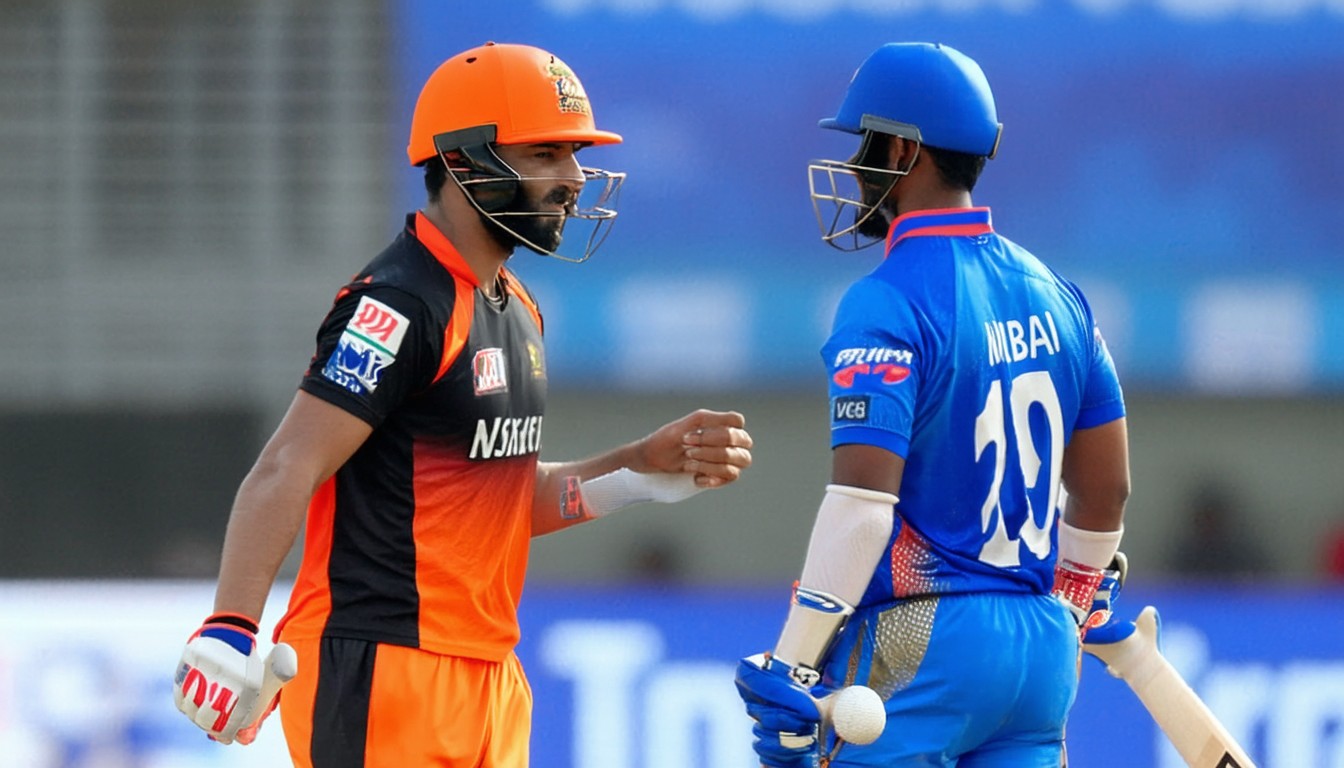

When Sunrisers Hyderabad faced off against Mumbai Indians, expectations were sky-high. Both franchises, steeped in modern IPL rivalry and known for fostering breakout cricketing moments, clashed in another high-stakes encounter that kept fans and pundits hooked until the final overs. This showdown not only featured exceptional talent on both sides but also underscored evolving tactics and lineup experiments that define contemporary T20 cricket.
Understanding the Match Narrative
Sunrisers Hyderabad (SRH) and Mumbai Indians (MI) have built a compelling rivalry, often producing close finishes and dramatic performance swings. In this particular match, the contest mirrored the broader IPL narrative: experienced stars anchoring one end, while emerging talents offered flashes of brilliance.
The pitch offered a fair balance between bat and ball, demanding calculated risk-taking from both captains. In the initial phase, Mumbai often leaned on early breakthroughs, while Hyderabad focused on stabilizing partnerships. The atmosphere was electric, reminding many of previous IPL classics between these sides, where last-over thrills and individual heroics swung momentum repeatedly.
Detailed Match Scorecard Breakdown
Clarity in the numbers reveals the key passages of play. Here’s a condensed version of the match scorecard for quick reference:
Sunrisers Hyderabad Batting
- Abhishek Sharma: 64 (36 balls, 7×4, 3×6)
- Rahul Tripathi: 37 (28 balls)
- Heinrich Klaasen: 41* (21 balls, 2×4, 3×6)
- Extras: 12
- Total: 190/6 (20 overs)
Hyderabad’s opening was aggressive, with Sharma dictating terms in the powerplay. Mid-innings consolidation by Tripathi helped avoid collapse, and Klaasen’s fiery finish set a challenging target.
Mumbai Indians Bowling Highlights
- Jasprit Bumrah: 4 overs, 21 runs, 2 wickets
- Piyush Chawla: 4 overs, 32 runs, 1 wicket
- Gerald Coetzee: 4 overs, 47 runs, 2 wickets
Bumrah’s death overs proved vital in restricting Hyderabad to under 200—a crucial psychological mark in the IPL.
Mumbai Indians Batting
- Ishan Kishan: 54 (30 balls, 6×4, 2×6)
- Suryakumar Yadav: 45 (28 balls)
- Tilak Varma: 33 (18 balls)
- Extras: 8
- Total: 188/7 (20 overs)
Kishan’s brisk start built momentum, but regular wickets led to a tense finish. Suryakumar and Varma stitched key partnerships, yet SRH’s disciplined bowling under pressure held firm.
Sunrisers Hyderabad Bowling Standouts
- Bhuvneshwar Kumar: 4 overs, 27 runs, 2 wickets
- T Natarajan: 4 overs, 36 runs, 3 wickets
The experienced duo delivered at the death, leveraging variations and sharp yorkers when the stakes were highest.
Key Turning Points and Tactical Insights
Strategically, Hyderabad’s use of spin in the middle overs paid dividends, halting what could have been match-defining partnerships. Mumbai, on the other hand, kept up with the required run rate but faltered with wickets falling at crucial junctures.
What Made the Difference?
- Early Strike and Powerplay Domination:
Hyderabad’s opening burst put MI on the back foot, drawing parallels with T20 trends where aggressive powerplay utilization translates to scoreboard pressure. - Klaasen’s Finisher Role:
The South African wicketkeeper-batsman exemplified the importance of the “finisher” archetype in T20s, much like Kieron Pollard or MS Dhoni in earlier IPL seasons. - Death Overs Execution:
Specialists like Bumrah and Natarajan underscored why ‘death bowling’ skills are at a premium during close games.
“Finishing in T20 isn’t about brute force alone; it’s the adaptability to play the situation, and KLassen showed that with maturity and calculated aggression,” notes an IPL strategist.
Individual Performances and Statistical Milestones
Performance reviews increasingly focus on advanced analytics—strike rates above 150, boundary percentages, and dot-ball pressure—over traditional aggregates.
- Abhishek Sharma’s powerplay onslaught: His boundary frequency set a rapid tone and forced MI to adapt early, reminiscent of elite openers in global franchise leagues.
- Jasprit Bumrah’s economy: Consistently sub-6 economy in death overs remains a benchmark other pacers aspire to.
- Suryakumar’s counter-attacking role: Despite short of his best, he managed a momentum-shifting stand, echoing his role in India’s T20 setup.
Lessons from This Encounter
This fixture highlighted several IPL realities:
- Adapting to fresh tactical approaches is critical—the use of leg-spin and left-arm pace often tilted the contest.
- Star players deliver under pressure but emerging Indian talent is equally pivotal, underscoring the league’s role in nurturing future national team assets.
- Close finishes reinforce the growing parity among IPL teams, adding to the unpredictability and drama fans crave.
Conclusion
The Sunrisers Hyderabad vs Mumbai Indians clash was not just another group-stage fixture; it epitomized the evolving standards of IPL competition. Aggressive top-order batting, disciplined late-over bowling, and well-devised tactical moves all contributed to a result that went down to the wire. For fans, it offered another reminder that in T20 cricket, no total is safe until the final ball has been bowled and every tactical nuance can shape the outcome.
FAQs
What was the final score in the Sunrisers Hyderabad vs Mumbai Indians match?
Sunrisers Hyderabad scored 190/6 in 20 overs, while Mumbai Indians managed 188/7 in 20 overs, leading to a narrow 2-run victory for SRH.
Who was awarded the Player of the Match?
Abhishek Sharma was named Player of the Match for his explosive 64 in the powerplay, setting the foundation for Hyderabad’s innings.
Which bowlers were most effective in this match?
Jasprit Bumrah for Mumbai Indians (2 wickets, 4-21) and T Natarajan for Sunrisers Hyderabad (3 wickets, 4-36) were standout performers during the key phases.
How did Klaasen’s innings impact the match?
Heinrich Klaasen’s unbeaten 41 off 21 balls provided a late surge to SRH’s total, ensuring they set a formidable target in the closing overs.
What made the contest so closely fought?
Disciplined bowling at the death, combined with timely wickets and strategic batting changes, meant that the match remained in the balance until the very last over.
Why are matches between Sunrisers Hyderabad and Mumbai Indians highly anticipated?
Both teams have built a reputation for close finishes, tactical depth, and the nurturing of emerging stars, making each encounter a marquee fixture in the IPL calendar.