
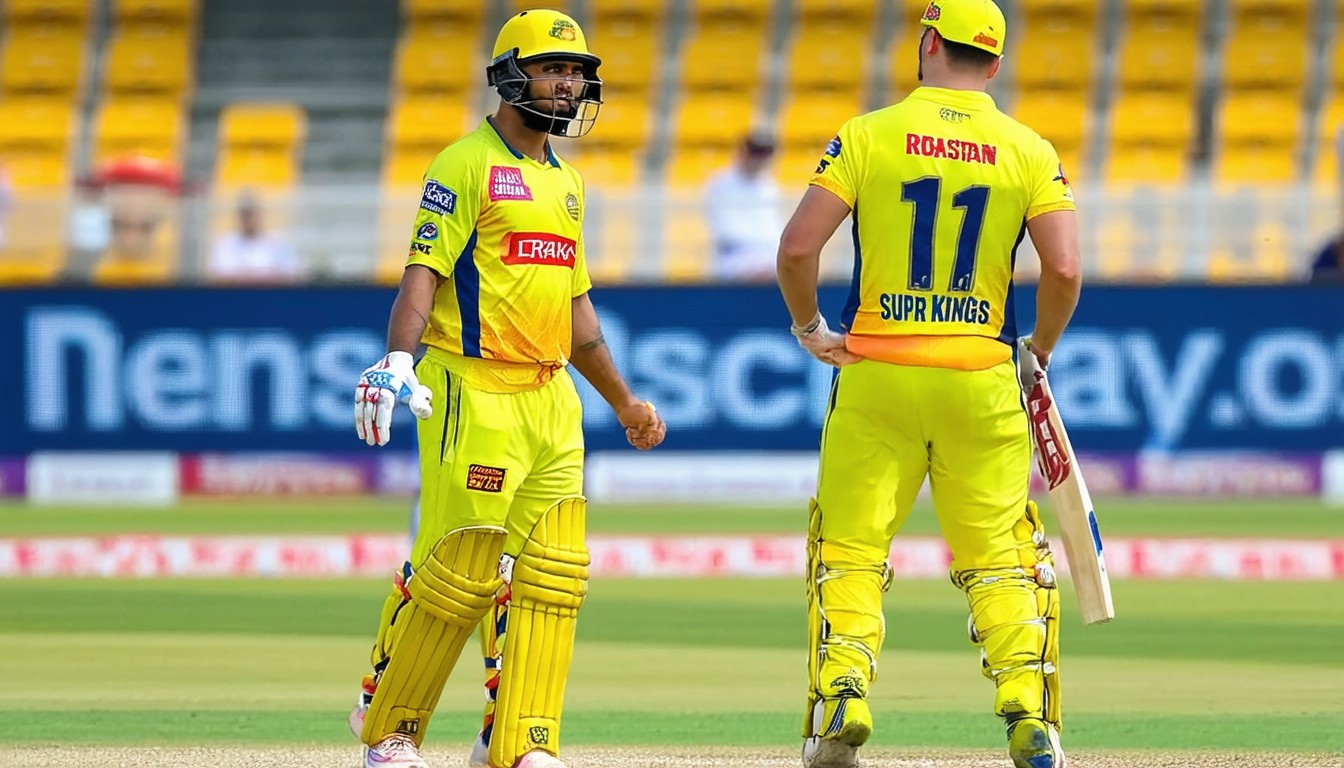

When Chennai Super Kings (CSK) and Rajasthan Royals (RR) meet on the Indian Premier League (IPL) stage, a clash of two iconic franchises draws cricket fans into a narrative of high stakes and high skill. Their encounters have produced masterful performances, tactical surprises, and moments that define IPL seasons. This scorecard highlight explores one of their recent matchups, providing a nuanced breakdown of the key moments, player performances, and strategic turning points that shaped the contest.
Setting the Stage: Historical Context and Match Build-Up
The rivalry between Chennai Super Kings and Rajasthan Royals is steeped in IPL history. Both teams were among the league’s original franchises, with CSK renowned for its consistency and tactical acumen under MS Dhoni’s leadership, and RR celebrated for its ability to nurture young talent and spring upsets.
Prior to this contest, both sides entered with contrasting narratives. Chennai, with its blend of seasoned veterans and emerging talents, sought to strengthen its position in the league table. Rajasthan, on the other hand, was eager to convert flashes of brilliance into tangible points, looking to capitalize on its dynamic batting order and a rejuvenated bowling attack.
The First Innings: Chennai Super Kings’ Measured Approach
Early Overs and Powerplay
Winning the toss, CSK elected to bat first—a decision backed by the team’s trust in its deep batting unit. The openers, typically spearheaded by Ruturaj Gaikwad, provided a steady start, negotiating the initial swing and seam offered by Rajasthan’s new-ball bowlers, such as Trent Boult and Sandeep Sharma.
- Powerplay runs: Approximately 40–50 for the loss of one wicket, showcasing a risk-averse but stable approach.
- Standout shots: Gaikwad’s cover drives and the calculated aggression from the other end ensured CSK set a foundation without early stumbles.
Middle Overs: Spin Challenge and Partnership Building
With the field spread, RR introduced its reliable spin duo—Yuzvendra Chahal and Ravichandran Ashwin. The middle-order was tested by their variations, as singles turned into a premium commodity and boundaries became rare.
- Key partnership: The rebuilding phase saw the CSK middle-order, featuring the likes of Moeen Ali and Ajinkya Rahane, string together a valuable stand of over 60 runs.
- Notable moment: A quick-fire cameo from Shivam Dube shifted momentum, finding gaps and clearing the in-field.
Death Overs: Finishing Push
The death overs brought fireworks. CSK’s lower middle order, marshaled by MS Dhoni, pressed the accelerator, capitalizing on any loose deliveries. With a mix of deft placement and calculated hits over the boundary, the team managed a late surge.
- Final total: CSK posted a competitive 165–175 range, bolstered by Dhoni’s finishing prowess.
“Timely partnerships and momentum shifts in the last five overs often prove decisive in T20 cricket. CSK’s ability to absorb pressure and then launch in the end overs set the platform for a strong defense,” notes a leading sports analyst.
Rajasthan Royals Chase: Balancing Aggression and Caution
Powerplay Dynamics
Chasing a moderate target, RR’s opening pair—Jos Buttler and Yashasvi Jaiswal—set an aggressive tone. The duo combined deft singles with powerful boundary hitting, forcing CSK bowlers onto the back foot early.
- Powerplay snapshot: RR raced to over 50 runs without significant loss, raising hopes for a straightforward chase.
Middle-Order Machinations
CSK’s spinners entered the fray, with Ravindra Jadeja and Moeen Ali extracting grip and turn from the surface. Jadeja’s spell, in particular, throttled the RR scoring rate, picking up crucial wickets and creating scoreboard pressure.
- Momentum shift: The wickets of Buttler and Jaiswal in quick succession triggered a mini-collapse.
- Partnership attempt: Sanju Samson, RR’s charismatic leader, tried to anchor the chase with timely boundaries and smart running.
The Final Stretch: Tense Climax
With the run rate climbing and wickets in hand, RR looked poised—but CSK’s death bowling, led by Deepak Chahar and Matheesha Pathirana, clawed the game back. The last few overs saw runs hard to come by, with fielders saving critical boundaries and bowlers executing yorkers under pressure.
- Decisive over: Rajasthan needed 12 runs off the final over. A boundary off the penultimate ball brought the equation down to four from one—before a nerveless final delivery from Pathirana secured a narrow win for CSK.
Scorecard Snapshot: Key Performers and Turning Points
Chennai Super Kings Top Performers
- Ruturaj Gaikwad: Anchored the innings with a composed 50+ score.
- MS Dhoni: Played a crucial finisher’s cameo, elevating the team total in the last overs.
- Ravindra Jadeja: Impactful with both bat and ball, claiming key wickets and providing control.
Rajasthan Royals Standouts
- Jos Buttler: Aggressive framework during the chase, registering a brisk 40+.
- Sanju Samson: Steadied the middle-order with a mature knock.
- Yuzvendra Chahal: Restrictive in the middle overs, picking up important wickets.
Tactical Analysis: What Decided the Match
Bowling Strategies Under Pressure
In T20 cricket, the margin for error is razor thin. CSK’s ability to adapt bowling strategies in real time—switching field placements, varying pace, and proactively turning to spinners as momentum shifted—proved pivotal.
Key Phases
- Middle overs squeeze: Both teams relied heavily on their spinners to dictate terms, leading to wickets at crucial junctures.
- Death overs execution: The composure of Dhoni and Pathirana in high-pressure scenarios underscored the value of experience.
Fielding Highlights
Brilliant outfield saves and a couple of sharp catches underlined the high-intensity fielding standards both teams brought. Missed chances, on the other hand, served as instructive moments for both sides moving forward.
Conclusion: Lessons from a High-Voltage Clash
The Chennai Super Kings vs Rajasthan Royals contest once again delivered on drama, quality, and tactical intrigue. For Chennai, clutch performances under pressure, astute leadership, and depth across departments tilted the game their way. Rajasthan, despite strong passages of play, fell just short, reaffirming the unforgiving nature of the T20 format.
For IPL fans and cricket strategists alike, these matchups are a reminder:
- No total is ever fully safe or out of reach.
- Spinners continue to shape the narrative of T20 cricket in Indian conditions.
- Experience and composure often make the difference during crunch moments.
FAQs
What was the final score in the Chennai Super Kings vs Rajasthan Royals match?
The contest saw both teams post competitive scores, with CSK setting a target in the 165–175 run range and RR coming close in their chase, ultimately falling marginally short in a thrilling finish.
Who were the top performers in the match?
Ruturaj Gaikwad and MS Dhoni stood out for Chennai with the bat, while Ravindra Jadeja was instrumental in both batting and bowling. For Rajasthan, Jos Buttler and Sanju Samson were key contributors.
How did CSK clinch the win in the closing stages?
Chennai’s disciplined death-over bowling, especially by Deepak Chahar and Matheesha Pathirana, restricted Rajasthan’s scoring ability. Tightly executed plans in the last overs ensured CSK’s narrow victory.
Which bowlers had the biggest impact on the game?
Ravindra Jadeja’s economical spell brought crucial wickets during the middle overs, while Yuzvendra Chahal kept the CSK batters in check with regular breakthroughs for Rajasthan.
What were some key turning points during the match?
Wickets in consecutive overs during Rajasthan’s chase shifted momentum towards CSK. Additionally, vital runs in the final overs of CSK’s innings proved decisive in a close match.
What does this result mean for the IPL standings?
The win helped Chennai strengthen their position in the playoff race, while Rajasthan faced the challenge of converting promising starts into victories in future fixtures.